What is Fairtrade?
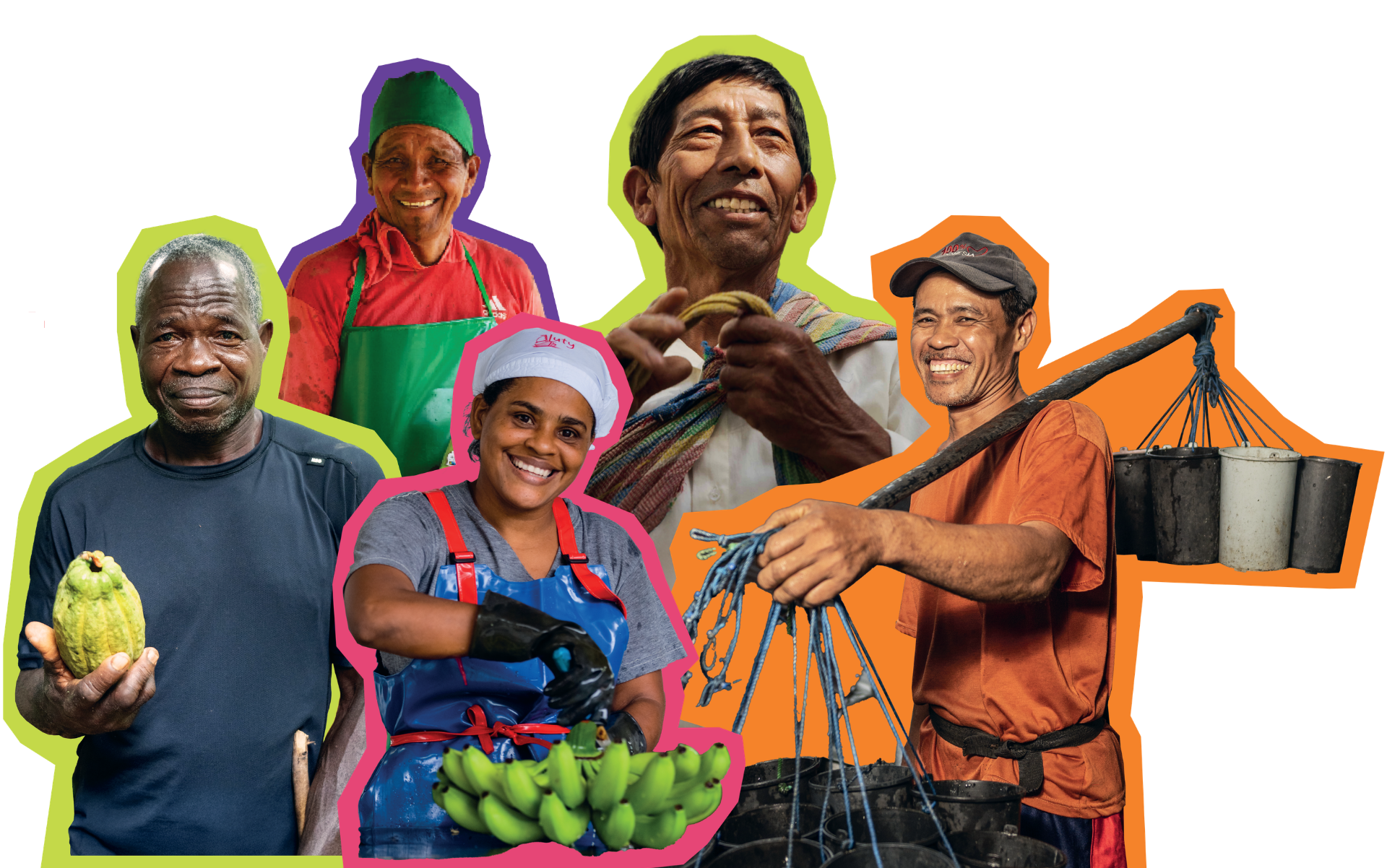
At Fairtrade, we care about the people behind our food. Everyday items like coffee, cocoa, bananas, and tea all start with farmers and workers growing and harvesting crops all around the world.
But too many farmers and workers earn too little to cover the basics, like food, housing, healthcare, and school for their children. Many work long hours in tough conditions, sometimes without proper safety equipment, fair contracts, or a say in how they're treated.
Fairtrade is the most recognized and trusted sustainability label working to make trade fairer for the people who grow our food.
It’s also the only certification system co-owned by farmers themselves, putting them at the heart of decision-making about standards, prices, and how the system evolves. After all, the people most impacted by global trade deserve a real voice in how it all works.
Fairtrade in numbers

Almost 2 million
Farmers and workers in over 70 countries
Over $2.7B
Fairtrade Premium raised over the last decade

$10M
Fairtrade Premium raised in 2025 in Canada alone
+37,000
products sold with the Fairtrade Mark around the world
Choosing Fairtrade makes a difference
Check out this video to find answers to frequently asked questions and discover why choosing Fairtrade makes a difference.
Here’s where we focus our efforts:

Fairtrade Premium
The Fairtrade Premium is an additional sum of money paid on top of the selling price. Farmers and workers decide democratically in which projects to invest it, like healthcare, education, farming technology, or infrastructure, based on their community’s priorities. It’s a powerful tool for long-term development and collective well-being.

Climate change
Fairtrade supports environmentally responsible farming by encouraging water conservation, reduced pesticide use, reforestation, and climate adaptation practices. By offering training and financial support for sustainable methods, Fairtrade helps farming communities protect ecosystems, lower carbon emissions, and build resilience against climate change.

Decent livelihoods
In a world where many farmers are often not able to cover basic needs like housing and food with their earnings, Fairtrade’s pricing model helps provide more stable incomes even when market prices fall. Through the Fairtrade Minimum Price, we support long-term planning, food security, and access to essentials for farmers and workers.

Child protection
Fairtrade works to prevent child labour through proactive, community-based monitoring and remediation systems. Farming communities are supported with training, resources, and awareness campaigns to identify risks, keep children in school, and build protective environments where young people can grow, learn, and thrive safely.

Workers’ rights
Fairtrade prioritizes workers’ rights by setting strong standards and partnering with labour organizations. Through certification and regular audits, Fairtrade works with employers and workers to promote respectful labour relations, non-discrimination, and the right to unionize and negotiate collectively for better terms and conditions.

Gender equality
Fairtrade promotes gender equity by requiring non-discriminatory practices, encouraging women’s participation in decision-making, and offering leadership and finance training for women. These initiatives help create more inclusive workplaces where women can access opportunities, contribute equally, and improve outcomes for themselves and their communities.
FAQs
-
The Fairtrade Minimum Price is the minimum that farmers’ organizations/producers are paid when selling their products through Fairtrade.
It aims to cover the average costs of sustainably producing their crop and acts as a safety net when market prices drop. Producers can get the market price when this is higher and can always negotiate for more.
-
The Fairtrade Premium is an extra sum of money (paid on top of the selling price) that farmers or workers invest in projects of their choice. They decide together how to spend the Fairtrade Premium to reach their goals, such as improving their farming, businesses, or health and education in their community.
-
The Fairtrade Standards are the requirements that producers and the businesses who buy their goods have to meet for a product to be Fairtrade certified.
The Standards ensure fairer terms of trade between farmers and buyers, protect workers’ rights, and provide the framework for producers to build thriving farms and organizations.
-
Fairtrade is unique in our approach to supporting producer-led change in developing countries. This is because Fairtrade understands that producers are best placed to take into account the specific challenges facing their farms, and decide on the most effective investments for their businesses and communities.
Fairtrade International and the producer networks offer advice, trainings and financial and other support to help producers meet Fairtrade Standards and maintain their certifications.
Fairtrade offers direct support to farmers and workers through a network of field staff who are specialists in the Fairtrade Standards, certification processes and requirements. They provide advisory services to farmers and workers, as well as training and information to help them comply with the Fairtrade Standards, strengthen their business capacities, and deepen Fairtrade impact.
Enabling farmers and workers to become better organized is the basis for all producer support services. Additional programmes of support in thematic areas – such as climate change, gender and workers’ rights – enable producers to strengthen their organizations and meet the specific needs of their members. Other programmes help producers to tackle human rights issues in their communities, such as child labour or to improve their financial and HR management. We aim to deepen these programmes further going forward.
-
Visit our main website at fairtrade.ca
Make your inbox fairer!
Join our mailing list to hear about Fairtrade updates, farmer stories, giveaways, and more.